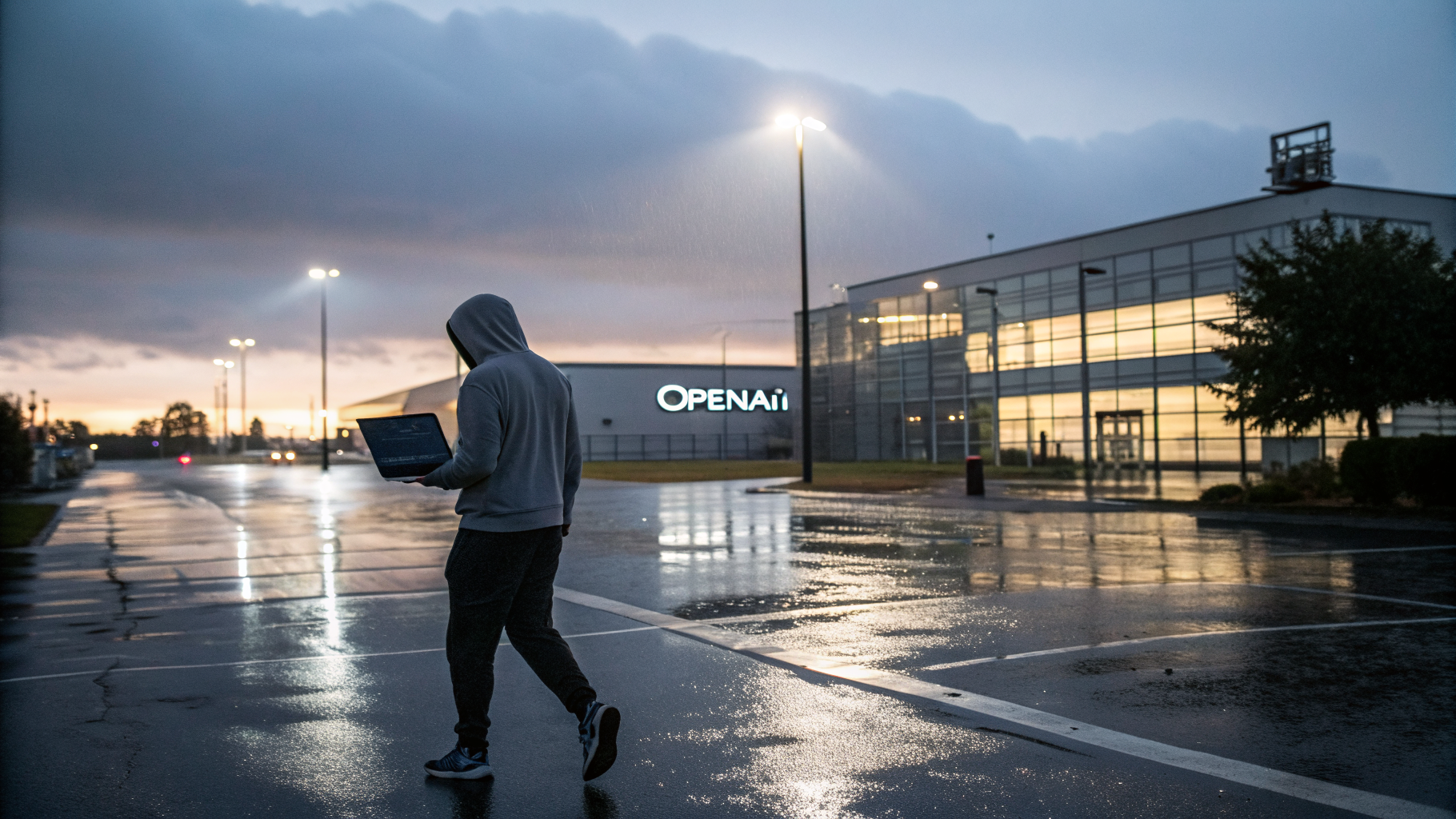
Another One Bites the Dust
David Robinson calls himself « something of a cliché. » He’s not wrong. Another safety researcher at a leading AI lab has walked out the door, and this time the parting shot isn’t a polite LinkedIn farewell. It’s a full-throated indictment: OpenAI’s culture is broken. I’ve been covering this space for over a decade, and I’ve lost count of how many times I’ve typed some version of that headline. But this one hits differently. Not because the allegations are new — they aren’t — but because the pattern is now so predictable it’s practically a genre.
Robinson’s resignation, reported by TechCrunch, is the latest in a long line of exits from OpenAI’s safety teams. And while each departure gets its own set of talking points, the throughline is always the same: the company says the right things, but the incentives point elsewhere. Speed over safety. Growth over guardrails. Product launches over precaution.
What struck me here isn’t the resignation itself. It’s the timing. We’re in late 2026, and the AI industry has spent the last three years promising us that safety isn’t an afterthought. That it’s baked in. That the adults are in the room. And yet here we are, again, watching another adult leave the room and tell us the room is on fire.
The Cliché That Won’t Die
Robinson’s self-awareness is almost disarming. He knows he’s a trope. The departing safety researcher who issues a dire warning on the way out. We’ve seen it with Timnit Gebru at Google. We’ve seen it with the various anonymous letters from OpenAI employees. We’ve seen it in the UK, in Canada, in the EU. The script writes itself: join a lab, get excited about the mission, realize the mission is subordinate to the roadmap, try to raise concerns, get sidelined, resign, tweet a thread, give a few interviews, fade into the background.
But here’s the thing: clichés become clichés because they keep happening. And they keep happening because the underlying problem never gets fixed.
OpenAI, for its part, has consistently denied that safety is being deprioritized. The company points to its safety teams, its red-teaming efforts, its partnerships with external auditors. And to be fair, OpenAI does more safety work than most of its competitors. But « more than most » is a low bar when most of the industry is sprinting toward AGI with the caution of a toddler chasing a balloon into traffic.
What Robinson is alleging — and I want to be careful here, because we only have his account — is that the culture itself is the problem. Not a specific decision, not a single product launch, but the underlying ethos. That safety concerns are treated as obstacles rather than inputs. That the people raising them are tolerated rather than heeded. That the company’s public commitments are decoupled from its internal priorities.
If that sounds familiar, it’s because it is. This is the same story we’ve heard from former employees at Meta, at Google, at Anthropic, at almost every major lab. The details differ, but the arc is identical.
Why This Matters More Than the Last One
I’ve been guilty of resignation fatigue. After a while, another safety researcher leaving another AI company starts to feel like background noise. Oh, another one? Cool. Wake me when something changes.
But I think that cynicism is a mistake. Not because any single resignation is going to change the trajectory of the industry, but because the accumulation of these exits tells us something important: the people who know these systems best are the ones most worried about them. That’s not a vibe. That’s a signal.
When the people building the thing are the ones saying « maybe slow down, » we should probably listen. When they leave and say it louder, we should definitely listen. And when they leave and say the culture is broken, we should ask ourselves why we keep pretending the culture is fine.
The Incentive Problem
Here’s the uncomfortable truth: OpenAI is not a safety company. It’s a product company. It’s a research lab. It’s a for-profit entity with investors who want returns. Safety is a constraint, not a goal. And constraints, by definition, are things you try to minimize.
I’m not saying the people at OpenAI don’t care about safety. I’m saying the structure they operate in makes it very hard to prioritize it when it conflicts with shipping. And it always conflicts with shipping. Always.
You can have all the safety teams you want. You can publish all the policy papers. You can hire all the ethicists. But if the people who raise concerns get sidelined, and the people who ship get promoted, the culture will reflect that. Every time.
The Metaverse Parallel Nobody Asked For
I’ve spent a lot of time covering the metaverse, and I’ve watched a similar pattern play out there. Companies announce grand visions. They hire teams. They publish blog posts about responsibility and safety. And then, when the rubber meets the road, the responsible people leave, and the vision gets watered down into a feature list.
Web3 had the same problem. Remember when every crypto project was going to « bank the unbanked » and « democratize finance »? And then the people who actually cared about that stuff got pushed out by the people who cared about token prices? Same story, different tech.
AI is not special. It’s not immune to the same dynamics that have corrupted every other tech boom. If anything, the stakes are higher, which makes the pattern more dangerous.
What Would Actually Change Things
I’m not naive enough to think that one resignation is going to fix OpenAI. Or that a blog post is going to change the incentives of an industry racing toward AGI. But I do think there are things that would actually matter.
- External safety audits with teeth. Not the kind where the company pays the auditor and controls the scope. Real, independent oversight with the power to halt deployments.
- Whistleblower protections. If safety researchers can be sidelined or fired for raising concerns, the culture will never change. Legal protections would at least raise the cost of retaliation.
- Transparency about departures. Companies should have to disclose when safety-critical employees leave and why. Not in a PR-friendly way — in a way that lets the public see the pattern.
None of these are radical ideas. They’re the bare minimum for any industry that claims to care about safety. The fact that they’re not standard practice tells you everything you need to know about where the priorities actually lie.
The Cynic’s Take
Here’s where I get cynical. I’ve watched this cycle repeat for years. A safety researcher leaves. There’s a flurry of articles. The company issues a statement. Nothing changes. Six months later, another researcher leaves. Rinse. Repeat.
At some point, you have to ask: is the system designed to fail? Is the point of safety teams to actually make things safer, or to provide cover for companies that want to look responsible while they race ahead?
I don’t think it’s a conspiracy. I think it’s worse than that. I think it’s just how incentives work. The people who care about safety are not the people who control the roadmap. And the people who control the roadmap are not rewarded for slowing down.
The Human Cost
We talk a lot about AI safety in the abstract. Existential risk. Alignment. Superintelligence. But there’s a human cost too. The people who work on these problems — who genuinely believe they’re trying to prevent harm — burn out. They leave. They get cynical. And the industry loses the very people who might have made a difference.
David Robinson is a cliché. But he’s also a person who tried to do the right thing and found that the system wasn’t built to support him. That’s not just a failure of culture. It’s a failure of imagination. We keep building systems that reward speed over caution, and then we’re surprised when the cautious people leave.
What Happens Next
OpenAI will probably issue a statement. It will be carefully worded. It will acknowledge Robinson’s contributions and reaffirm the company’s commitment to safety. It will not address the underlying culture problem, because addressing it would require changing the incentives, and changing the incentives would require slowing down.
And the cycle will continue. Another researcher will leave. Another article will be written. Another round of hand-wringing will ensue. And the industry will keep racing ahead, with fewer and fewer people left to raise the alarm.
I wish I had a better ending for this piece. I wish I could tell you that this resignation is the one that changes everything. But I’ve been doing this too long to believe that.
What I can tell you is this: the people who know these systems best are worried. They’re leaving. And they’re telling us why. If we keep ignoring them, we don’t get to act surprised when things go wrong.
Robinson called himself a cliché. The real cliché is the industry that keeps proving him right.
Original source: read the full article