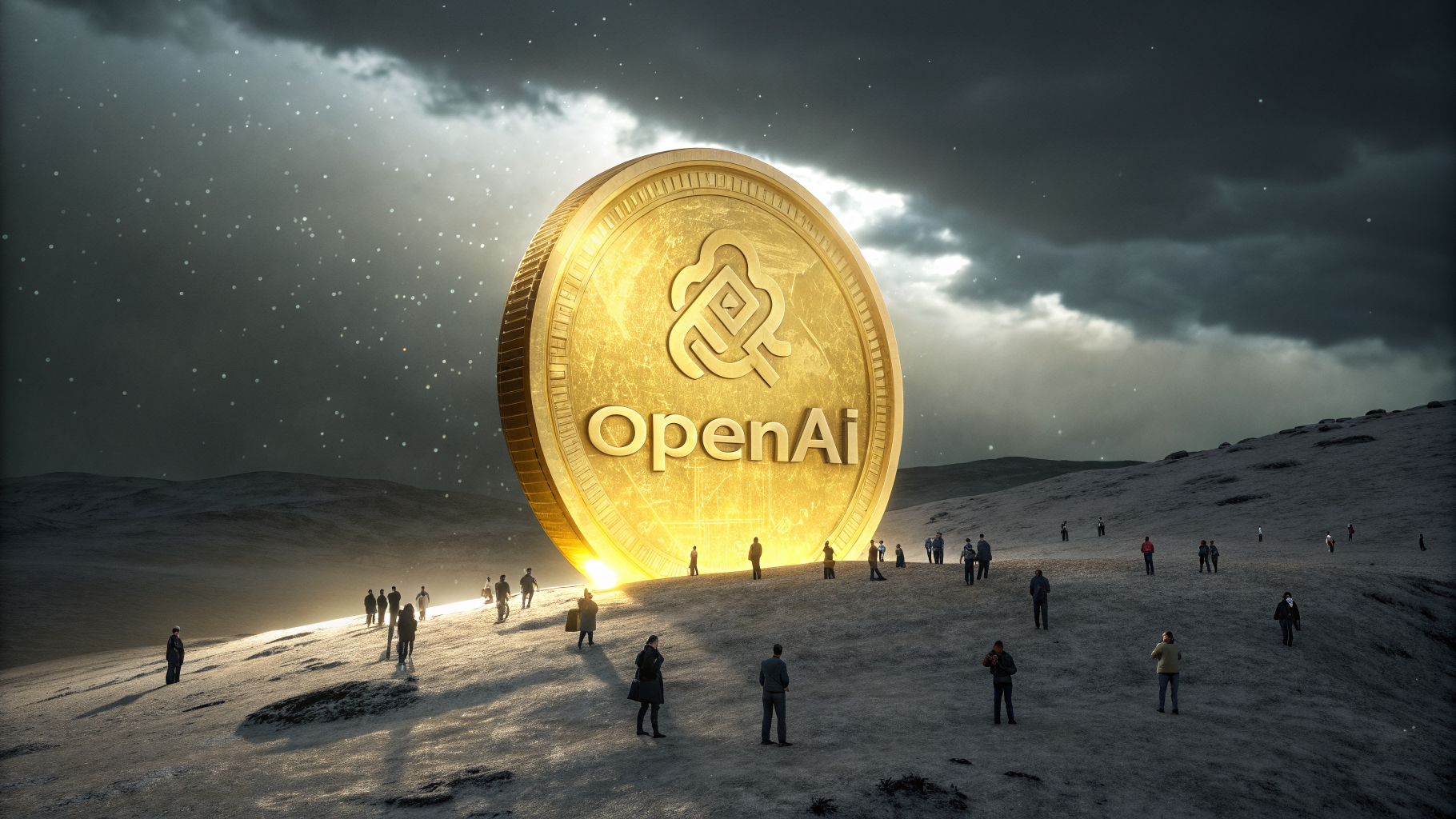
OpenAI Just Pulled the Classic Bait-and-Switch
I’ve been covering tech long enough to know a price hike when I see one. But this? This is something else. OpenAI, the company that once promised to democratize artificial intelligence, has quietly rolled out a $500 per month Pro subscription while simultaneously gutting its existing $200 tier. If you’re a ChatGPT power user, you just got played.
The news broke via Engadget, and my first reaction was a bitter laugh. Of course they did. We all saw this coming, didn’t we? The moment OpenAI started whispering about ‘agentic AI’ and ‘reasoning models,’ the writing was on the wall. The $200 ChatGPT Pro plan was never sustainable. It was a loss leader, a way to hook the whales before the real squeeze began.
Now, for the low, low price of $500 a month, you can get… what exactly? More tokens? Faster responses? A gold-plated chatbot that still hallucinates citations? I’ve reached out to OpenAI for clarification, but I’m not holding my breath. The company has a habit of announcing features that sound revolutionary until you read the fine print.
What You Actually Get for $500 (Spoiler: Not Much)
Let’s break down the new Pro tier. According to the Engadget piece, the $500 plan offers ‘priority access’ to new models, ‘enhanced compute’ for complex tasks, and ‘dedicated support.’ That’s corporate speak for ‘we’ll let you cut the line, but only if you’re already rich.’
Meanwhile, the $200 tier—which thousands of developers, researchers, and small businesses rely on—is getting nerfed. Fewer API calls, slower response times, and reduced access to the latest features. It’s the classic enshittification playbook: degrade the existing product to push users toward a more expensive option.
I think what annoys me most is the timing. OpenAI just wrapped up its big DevDay announcements, where it hyped up its new ‘o1’ reasoning model and a bunch of developer tools. The subtext was clear: ‘We’re innovating faster than anyone else.’ But innovation doesn’t mean much when you’re pricing out the very people who helped build your ecosystem.
And let’s not pretend this is about covering costs. OpenAI has raised billions from Microsoft and others. It’s not hurting for cash. This is about maximizing revenue before the bubble bursts. The company knows that the AI hype cycle won’t last forever, so it’s squeezing its most loyal customers while it still can.
The Domino Effect: Who’s Next?
Here’s the thing that really gets me: how long until every other AI company does the same? Anthropic, Google, Cohere—they’re all watching. If OpenAI can get away with charging $500 a month, why wouldn’t they? We’re already seeing tiered pricing models across the board. It’s only a matter of time before the $20 ChatGPT Plus plan becomes the new ‘free’ tier, and the free tier becomes a glorified demo.
I’ve seen this movie before. It happened with streaming services. It happened with cloud storage. It happened with social media APIs. The pattern is always the same: start cheap or free to build a user base, then slowly raise prices and degrade the experience until you’re left with a handful of expensive tiers that only enterprises can afford.
What’s different this time is the speed. OpenAI went from ‘free for everyone’ to ‘$500 a month’ in less than three years. That’s breathtakingly fast, even for Silicon Valley. And it’s a sign that the company is feeling the heat. Competition is fierce, talent is expensive, and the compute costs are astronomical. Something had to give.
But here’s a rhetorical question: if OpenAI is the market leader and it’s already resorting to these tactics, what does that say about the sustainability of the entire AI industry? Maybe the economics just don’t work. Maybe we’ve been sold a bill of goods. Maybe the AI revolution is less about transforming society and more about extracting as much money as possible from a small group of power users.
The Real Cost of AI: Your Wallet and Your Trust
Let’s talk about trust for a second. OpenAI has built its brand on the idea of ‘safe, beneficial AI.’ But actions speak louder than blog posts. Nerfing the $200 tier while introducing a $500 tier isn’t just a business decision—it’s a betrayal of the developers who bet on OpenAI’s platform.
I’ve spoken to startup founders who built their entire products on top of ChatGPT’s API. They’re now scrambling to figure out how to absorb the cost increases or migrate to competitors. One founder told me, ‘It feels like we’re being punished for our success.’ That’s not a good look for a company that claims to care about its community.
And what about the researchers and academics who use ChatGPT for their work? Many of them are on tight budgets. A $500 monthly subscription is simply out of reach. So they’ll either downgrade to the nerfed $200 tier or switch to open-source alternatives. Either way, OpenAI loses their feedback and their loyalty.
I’m not saying OpenAI owes us anything. It’s a business, and businesses need to make money. But there’s a difference between making a profit and price gouging. This feels like the latter. And it’s happening at a time when the company is under increasing scrutiny from regulators and the public.
What This Means for the Metaverse and Web3
As someone who covers the metaverse and Web3, I can’t help but see parallels. Remember when everyone was promising decentralized, user-owned platforms? The pitch was that Web3 would break the stranglehold of big tech. But here we are, in 2024, watching one of the biggest AI companies centralize power and hike prices.
The metaverse, meanwhile, is still trying to find its footing. Meta’s Horizon Worlds is a ghost town. Decentraland and The Sandbox are niche at best. And now, with AI companies charging enterprise-level prices, the dream of an open, accessible metaverse feels further away than ever.
But maybe that’s the point. The tech industry has always been about consolidation. The promise of decentralization is just a marketing hook. The reality is that a handful of companies control the infrastructure, the models, and the pricing. If you want to play, you have to pay.
I think we need to start asking harder questions. Why is AI so expensive to run? Is there a way to make it more efficient? And why are we allowing a few companies to dictate the terms of access? These aren’t just technical questions—they’re political and economic ones.
The Enshittification Playbook: A Familiar Story
Let’s be clear: OpenAI isn’t the first company to do this, and it won’t be the last. The term ‘enshittification’ was coined by Cory Doctorow to describe how platforms degrade over time to extract more value from users. We’ve seen it with Facebook, Amazon, and Uber. Now we’re seeing it with AI.
The playbook is simple. First, attract users with a great product at a low price. Then, once you’ve achieved market dominance, slowly degrade the experience and raise prices. Users complain, but where else are they going to go? The switching costs are too high, and the alternatives are either inferior or equally expensive.
OpenAI has followed this playbook to a T. It started with a free tier that was genuinely useful. Then it introduced ChatGPT Plus for $20 a month. Then it rolled out the $200 Pro tier for power users. Now it’s adding a $500 tier and nerfing the $200 one. Each step is a little more brazen than the last.
What’s next? A $1,000 tier? A $5,000 enterprise plan? A pay-per-token model that makes you think twice before asking a question? The sky’s the limit when you have no real competition.
But here’s the thing: enshittification only works if users don’t have options. And right now, there are options. Open-source models like Llama and Mistral are getting better every day. Google’s Gemini is competitive. Anthropic’s Claude is a viable alternative. If OpenAI pushes too hard, it risks driving users away.
Maybe that’s why the company is moving so fast. It knows the window is closing. It knows that the AI market is becoming commoditized. So it’s trying to lock in as much revenue as possible before the tide turns.
Should You Pay $500 a Month for ChatGPT?
Short answer: no. Unless you’re a hedge fund manager who uses ChatGPT to generate trading strategies, or a large enterprise with deep pockets, there’s no reason to pay $500 a month for a chatbot. The $20 Plus tier is still decent, even if it’s likely to get nerfed next.
But that’s not the point. The point is that OpenAI is testing the limits of what it can charge. And if enough people pay, the company will keep pushing. It’s basic supply and demand. The only way to stop the enshittification is to vote with your wallet.
I’m not naive enough to think that a few angry blog posts will change OpenAI’s strategy. But I do think that users need to be aware of what’s happening. The AI industry is at a crossroads. It can either become a tool for empowerment, or it can become another extractive industry that serves only the wealthy.
I know which future I’d prefer. But it’s not up to me. It’s up to all of us. So the next time you see a $500 subscription plan, ask yourself: is this really worth it? Or is it just another example of a company that’s forgotten why it started?
The Bottom Line: A Warning Shot for the Industry
OpenAI’s new pricing is a warning shot. It’s a signal that the era of cheap AI is coming to an end. Companies that rely on AI will need to budget accordingly. Developers will need to rethink their architectures. And users will need to decide how much they’re willing to pay for convenience.
I think this is a pivotal moment. The AI industry has been in a gold rush for the past few years. Everyone’s been chasing the next big thing. But gold rushes end. And when they do, the companies that survive are the ones that built sustainable businesses, not the ones that squeezed their customers dry.
OpenAI is playing a dangerous game. It’s betting that its brand and its technology are so far ahead that users will pay whatever it asks. Maybe that’s true for now. But the gap is closing. And when it does, OpenAI might find that it’s alienated the very people who made it successful.
I’ll be watching closely. And I’ll be writing about it. Because this isn’t just about one company. It’s about the future of AI, the metaverse, and the entire tech ecosystem. And I, for one, am not ready to give up on the idea of an open, accessible internet.
Original source: read the full article