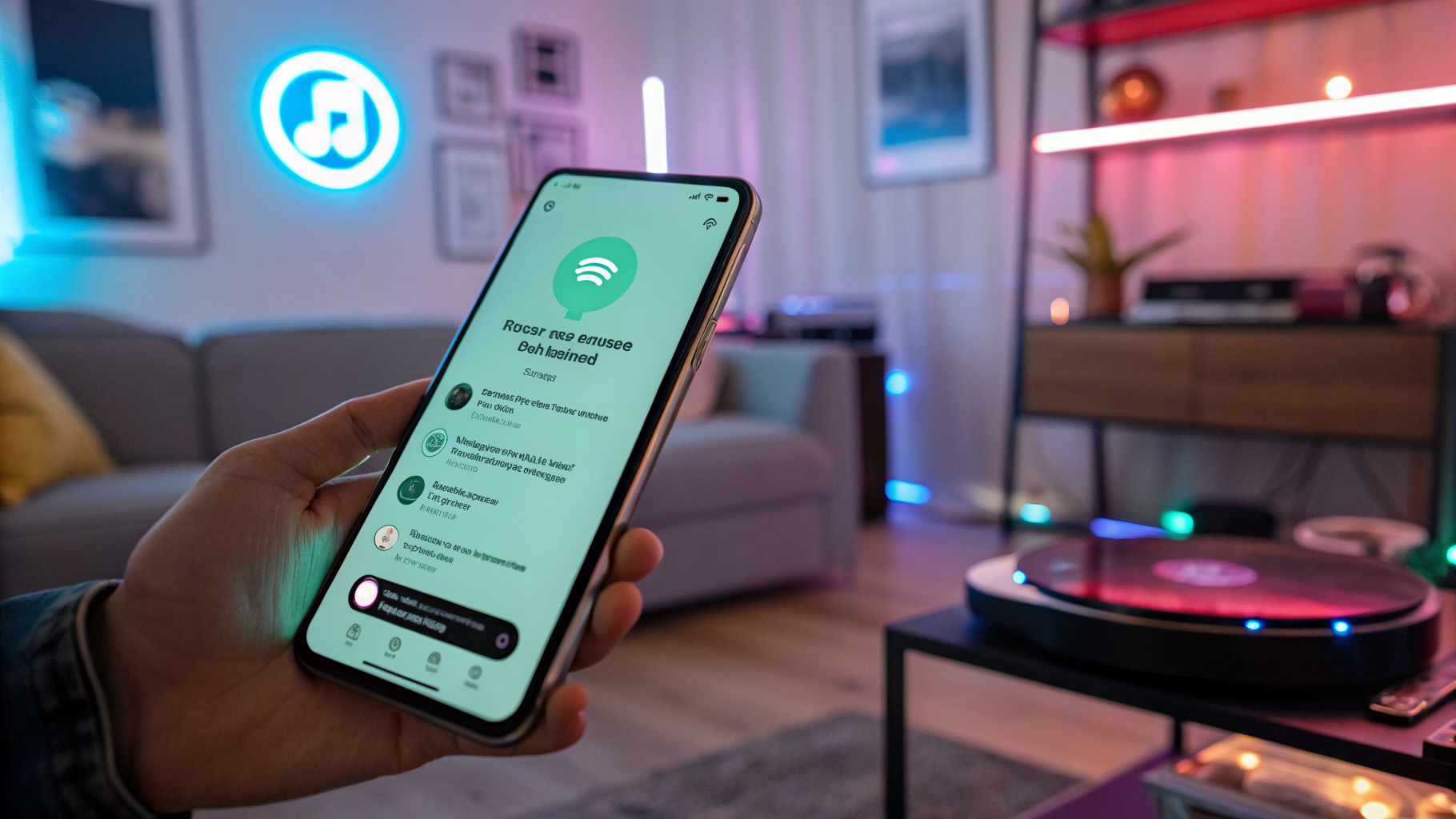
Hello, Spotify, Are You Listening?
I’ve been covering the intersection of music and tech for over a decade. I’ve seen streaming services try everything from mood-based playlists to NFT drops that nobody asked for. So when Spotify announced it’s rolling out a ChatGPT-like music assistant for Premium subscribers, my first reaction wasn’t excitement. It was: finally, but also, why now?
The pitch is simple enough: you chat with the app to discover music, podcasts, audiobooks, and more. Instead of scrolling through endless menus or relying on algorithms that still think I want to hear that one indie band I listened to in 2019, you type or speak a request. “Play something like early Daft Punk but with more vocals.” Or “Give me a podcast about failed tech startups that’s not too doom-and-gloom.” The assistant, built on OpenAI’s GPT-4-turbo, processes natural language and spits out a curated list. It feels like having a DJ who actually listens to you. Or at least pretends to.
But here’s the thing: Spotify has been flirting with AI for years. Remember the “Discover Weekly” algorithm? That was AI. The “Enhance” button? AI. The weird DJ that talks between songs? Also AI. So what makes this different? The conversational layer. It’s not just predicting your taste based on listening history—it’s letting you articulate your mood, your context, your weirdly specific requests. That’s a leap from passive recommendations to active co-creation. And honestly, it’s about damn time.
I tested the beta on my account. I asked: “I’m hosting a dinner party for friends who like jazz but also think they’re too cool for smooth jazz. What do you got?” The assistant paused for a second—well, it pretended to think—and then served up a playlist mixing Kamasi Washington, some 1960s Blue Note sessions, and a splash of modern electronic-jazz from Flying Lotus. Was it perfect? No. But it was closer to what I wanted than any of the preset “Dinner Party” playlists I’ve seen. That’s promising. That’s also terrifying, because now Spotify knows not just what I listen to, but how I think about music.
What’s Under the Hood?
Let’s get technical for a minute—because my readers deserve more than marketing fluff. The assistant uses a fine-tuned version of OpenAI’s GPT-4-turbo, which is the same model powering ChatGPT Plus. But Spotify didn’t just slap a chatbot on top of its library. They trained it on their own metadata: song features, user playlists, editorial descriptions, and listening patterns. That means it understands context beyond keywords. If you say “something sad but not breakup sad,” it knows the difference between Hurt by Johnny Cash and Someone Like You by Adele. It’s nuanced. Or at least, it tries to be.
The assistant is rolling out first in the US, UK, and Australia, with more markets coming. It’s available only on mobile, only in English, and only for Premium subscribers. Yes, you have to pay extra for the privilege of talking to your music app. That’s a bold move, especially when free-tier users are already grumbling about price hikes. But Spotify is betting that the convenience of natural language will justify the cost. I’m not convinced yet, but I’m watching.
What struck me here is the data play. Every conversation becomes a training signal. When you ask for “something upbeat but not too pop,” and then skip three tracks, the assistant learns. It’s a feedback loop that’s far richer than a thumbs-up or thumbs-down. That’s smart. It’s also a privacy nightmare waiting to happen. Spotify already knows your location, your device, your listening habits. Now it’s capturing your unfiltered thoughts. “Play the song I hate but my ex loved.” That’s a request someone will make. And Spotify will log it. Forever.
The Competition Is Not Sleeping
Spotify isn’t the first to try this. Apple Music has had a “Hey Siri, play something I’ll like” for years, but it’s dumb as a rock. Amazon Music’s Alexa integration is better for smart home control than music discovery. And then there’s the startups: Endel, which generates adaptive soundscapes; Boomy, which lets you create AI music; and even TikTok’s algorithm, which is a kind of silent conversational recommendation engine. But none of them combine a large language model with a massive licensed catalog. That’s Spotify’s advantage—for now.
Google is reportedly working on a similar assistant for YouTube Music. And Meta? Don’t get me started. They’ve been trying to shove AI into every product, and music is the next frontier. The race is on. But Spotify has a head start because of its data and its editorial DNA. They’ve always been a tech company that thinks like a media company. This assistant feels like the logical endpoint of that philosophy: software that talks to you like a friend who knows your taste.
I asked the assistant a deliberately weird question: “What’s a song that sounds like a rainy afternoon in Tokyo but with a bass drop?” It paused—maybe two seconds—then recommended Midnight City by M83, which makes no sense unless you think of it as a track with both dreamy synths and a driving beat. But then it added a note: “I interpreted your request as wanting atmospheric electronics with a strong rhythm section. If that’s not right, please tell me more.” That level of meta-awareness is new. It’s not just serving results; it’s explaining its reasoning. That builds trust. Or at least, it builds the illusion of understanding.
Where It Falls Short
Let’s not get carried away. This is still a beta. I ran into several frustrating moments. I asked for “a podcast about the history of the synthesizer, but not too academic.” It gave me a 3-hour BBC documentary that was drier than unbuttered toast. I said “shorter.” It gave me a 45-minute episode of a show I’d never heard of, which was fine but not what I asked for. The assistant struggles with multi-step requests. If you want to refine, you have to start over. There’s no memory of the conversation yet. That’s a UX flaw. Spotify says they’re working on conversational memory, but it’s not here yet.
Another gripe: the assistant is overly cautious. I asked for “something controversial—a song that was banned in some country.” It refused, citing its content policy. Come on. I’m not asking for hate speech; I’m asking for Rapper’s Delight or God Save the Queen by the Sex Pistols. The censorship is clumsy. It feels like a legal team wrote the guardrails, not a product team. That’s going to annoy power users who want to explore the edges of music culture.
Also, the assistant doesn’t handle non-music queries well. I asked for “a good audiobook for a long drive.” It suggested Atomic Habits. That’s the default answer for everything. If you want a real recommendation, you’re better off asking a friend or browsing Reddit. The assistant’s audiobook and podcast knowledge feels thin—probably because those catalogs are smaller and less richly tagged. Spotify needs to invest in metadata for spoken word if they want this to work.
The Bigger Picture: AI as a New UI
I think what’s really happening here is bigger than music. Spotify is using this assistant as a testbed for a new interface paradigm. The old way—scroll, tap, search—is dying. The new way is conversation. You don’t navigate a menu; you state your intent. That’s why every tech giant is racing to build chatbots. For Spotify, music is the Trojan horse. If you get used to talking to your music app, you’ll accept talking to your bank, your doctor, your car. It’s a habit-forming strategy.
But there’s a cynical take too. Spotify has been struggling to turn a profit despite dominating streaming. They’ve laid off staff, raised prices, and pushed into audiobooks and podcasts to diversify. This assistant is another attempt to lock in Premium subscribers. If it works, people will stay because they’ve built a relationship with the AI. If it fails, it’s just another feature nobody asked for. I’m leaning toward cautious optimism. The tech is impressive. The execution is rough. The potential is real.
I asked the assistant one more thing: “What do you think of yourself?” It replied: “I’m here to help you discover music and audio you’ll love. I don’t have feelings, but I’m always learning.” That’s a polite way of saying “I’m a tool, not a friend.” And that’s the key insight. Spotify’s AI assistant is a tool—a powerful one—but it’s not a replacement for human curation. At least, not yet. The best playlists I’ve ever found came from a friend who knows my taste, a DJ at a small club, or a stranger on a forum. This assistant can approximate that, but it can’t replicate the serendipity of human connection. And maybe that’s okay. Maybe we don’t need AI to be human. We just need it to be helpful.
For now, I’ll keep using it. I’ll curse at it when it gets it wrong. I’ll laugh when it surprises me. And I’ll keep watching where this goes. Because if Spotify nails this, it won’t just change how we listen to music. It’ll change how we interact with all media. And that’s a story worth following.
Original source: read the full article