
The Green Revolution: How Sustainability is Redefining Data Centres
The digital world we inhabit—every stream, search, and cloud-saved file—is powered by a colossal, hidden infrastructure. At the heart of this are data centres, the tireless engines of the internet. But their immense power comes at a cost, creating a pressing need for a paradigm shift towards **sustainability, data centres, green tech, and renewable energy**. As our reliance on data grows exponentially, the industry is at a critical juncture, racing to innovate and mitigate its environmental footprint before it’s too late. The future of technology is not just about being smarter or faster; it’s about being cleaner.
From Power Hogs to Green Hubs: The Evolution of Data Centres
In the early days of the internet, data centres were an afterthought—secure, air-conditioned rooms packed with servers. The primary concerns were uptime and processing power, with energy consumption being a secondary operational cost. As the demand for data exploded with the rise of cloud computing, social media, and AI, these server farms ballooned into “hyperscale” facilities, some spanning over a million square feet. Their energy consumption soared, drawing scrutiny from environmental groups and regulators alike.
This immense power draw, equivalent to that of entire cities, sparked a necessary evolution. The industry began to shift its focus from raw performance to efficiency. This transformation wasn’t just about corporate responsibility; it became a matter of economic survival. As energy costs climbed, efficiency became a competitive advantage. This pivot marked the beginning of the green data centre movement, integrating principles of sustainable design and operation into the very core of digital infrastructure. A pivotal moment was the realization that cooling, not computing, was often the biggest energy drain, leading to a wave of innovation explored in detail by publications like the MIT Technology Review.
Practical Applications of Green Tech in Data Centres
The move towards sustainability is not just theoretical. It is being implemented through groundbreaking technologies and strategies that are reshaping how data centres are built and operated. These practical applications demonstrate the industry’s commitment to a greener future.
Use Case 1: Advanced Cooling Solutions
Traditionally, data centres have been cooled by massive, energy-intensive computer room air conditioners (CRACs) that blast cold air, much like a giant refrigerator. This method is notoriously inefficient. The modern approach focuses on targeted, highly efficient cooling. Techniques like liquid cooling, where fluids with high thermal conductivity are piped directly to hot components like CPUs, can reduce cooling energy by up to 90%. Even more advanced is immersion cooling, where entire servers are submerged in a non-conductive dielectric fluid, eliminating the need for fans and air chillers altogether. Furthermore, facilities in colder climates are harnessing “free air” cooling, and pioneering projects are capturing waste heat to warm nearby homes and businesses, turning a liability into a community asset.
Use Case 2: AI-Powered Energy Optimization
Artificial intelligence is being used to fight the energy consumption problem it helps create. Companies like Google have famously leveraged their DeepMind AI to manage data centre cooling systems. By analyzing thousands of sensors and predicting how operational changes will affect energy use, the AI can make real-time adjustments to pumps, chillers, and windows. This has resulted in a consistent 30-40% reduction in cooling energy, a massive saving at scale. This application of **green tech** shows how intelligent automation can optimize complex systems beyond human capability, ensuring that not a single watt is wasted.
Use Case 3: A Full-Scale Transition to Renewable Energy
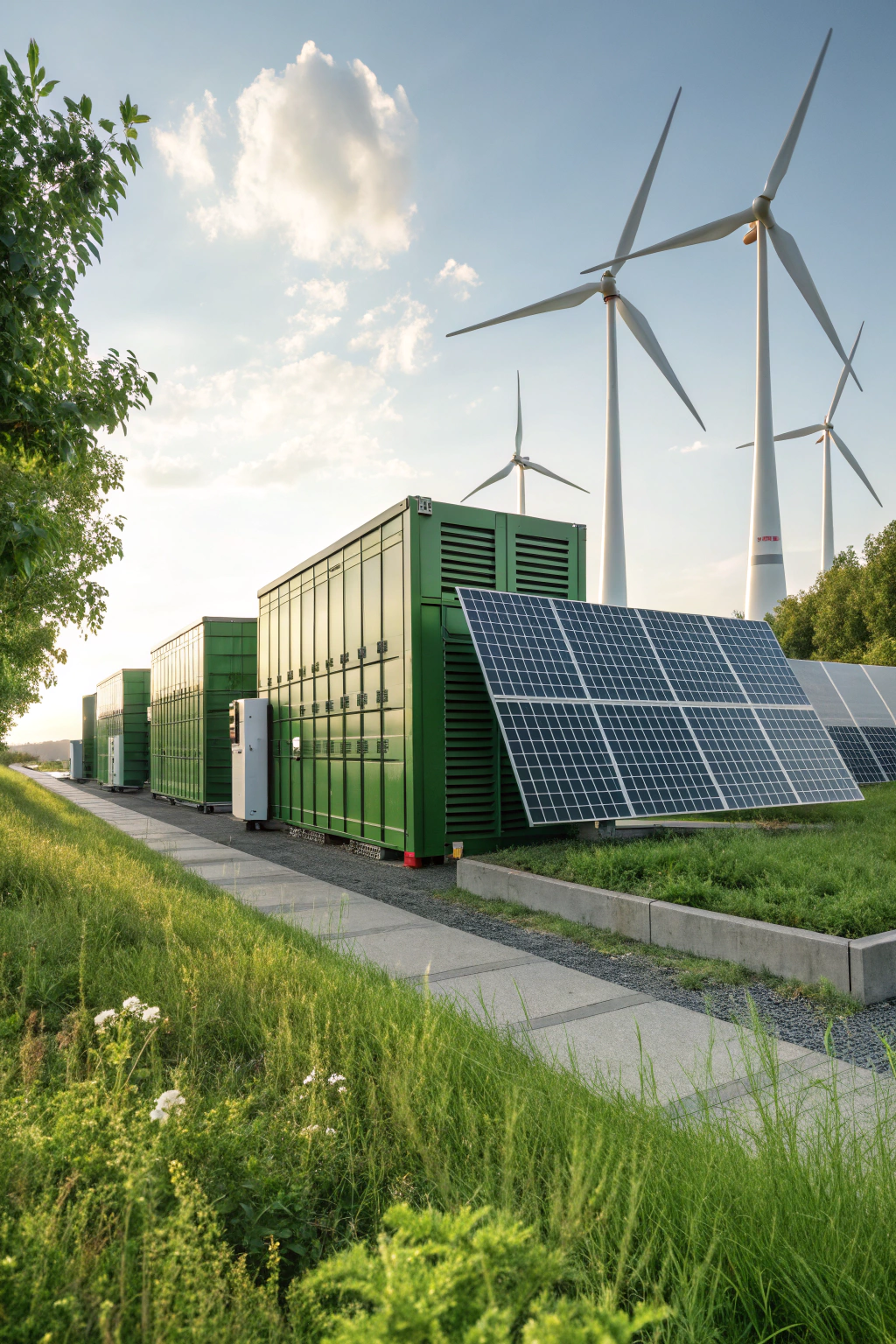
Perhaps the most significant shift is the industry-wide pivot to **renewable energy**. Major cloud providers like Amazon, Microsoft, and Google are now the largest corporate purchasers of clean power globally. They achieve this through a combination of on-site solar and wind installations and, more commonly, Power Purchase Agreements (PPAs). These long-term contracts fund the development of new wind and solar farms, adding clean capacity to the grid that powers their facilities. The ultimate goal is to achieve 24/7 carbon-free energy, matching every hour of data centre operation with verifiable clean power, a complex but essential goal for true **sustainability**.
Challenges and Ethical Considerations
The path to sustainable data infrastructure is not without obstacles. One major challenge is the “Jevons paradox,” where increasing energy efficiency leads to lower costs, which in turn encourages even greater consumption of data services, potentially negating the gains. Another significant issue is e-waste. The rapid pace of technological advancement means servers have a short lifecycle, creating mountains of electronic waste filled with hazardous materials. A circular economy model, where components are reused, refurbished, and recycled, is essential but still in its infancy.
Ethically, the industry must also guard against “greenwashing”—making exaggerated or misleading claims about environmental performance. Transparency and third-party verification are crucial for holding companies accountable. Finally, ensuring that the benefits of **green tech** and **renewable energy** investments are distributed equitably, without placing an undue burden on local communities or ecosystems, remains a key ethical consideration for the future of **data centres**.
What’s Next? The Future of Sustainable Computing
The innovation in sustainable computing is accelerating, with exciting developments on the horizon.
Short-Term: We will see wider adoption of liquid and immersion cooling as the standard for new high-density server racks. The focus on retrofitting older **data centres** with more efficient hardware and software will also intensify, alongside more sophisticated AI-driven energy management platforms.
Mid-Term: The concept of the circular economy will become mainstream. Companies like ITRenew (now part of Iron Mountain) are leading the charge in decommissioning hardware and securely remarketing components, extending server life and reducing e-waste. We’ll see modular data centre designs that are easier to upgrade and recycle.
Long-Term: The very idea of a centralized data centre may evolve. We anticipate a rise in smaller, geographically distributed “edge” data centres located closer to users and powered by local microgrids. More radical ideas, like Microsoft’s successful Project Natick which tested the feasibility of underwater **data centres**, could become viable. These submerged pods use the cold ocean water for natural cooling, offering incredible energy efficiency and reliability.
How to Get Involved and Stay Informed
Staying on top of the rapid changes in sustainable technology is key for professionals, students, and enthusiasts alike. You can engage with this topic through several platforms:
- The Green Grid: A non-profit consortium of industry professionals dedicated to developing standards and metrics for data centre energy efficiency. Their resources are invaluable for deep technical understanding.
- r/sustainability Subreddit: A broad community on Reddit for discussing all aspects of sustainability, with frequent conversations about technology’s role and impact.
- Industry Reports: Follow annual sustainability reports from major tech companies like Google, Microsoft, and Apple for direct insights into their strategies and progress.
For a broader look at how these technologies connect with emerging digital worlds, explore the cutting-edge insights at the Metaverse Virtual World blog.
Debunking Common Myths About Green Data Centres
Several misconceptions can cloud the conversation around the environmental impact of our digital lives. Let’s clear up a few:
- Myth: Going digital is inherently green. While digital services can replace resource-intensive physical activities, the digital infrastructure itself has a significant physical footprint, consuming vast amounts of energy and water. The path to **sustainability** requires conscious effort, not just digitization.
- Myth: Renewable energy is too unreliable for 24/7 data centre operations. This is a dated view. Modern **data centres** use a sophisticated mix of renewable sources (solar for the day, wind for the night), large-scale battery storage, and intelligent grid connections to ensure constant, reliable, and clean power.
- Myth: The cloud is an abstract, “ethereal” place. This is perhaps the most pervasive myth. The cloud is physical. It is a network of massive industrial buildings filled with millions of computers that consume real resources. Recognizing this physical reality is the first step toward appreciating the importance of **green tech** and **renewable energy** in this sector.
Top Tools & Resources for a Greener Tech World
- Schneider Electric EcoStruxure: This is a comprehensive IoT-enabled platform used by many facility managers to monitor, manage, and automate energy and sustainability profiles in real-time. It provides the data-driven insights needed to make impactful efficiency improvements in complex environments like **data centres**.
- The Green Grid’s PUE Standard: Power Usage Effectiveness (PUE) is the industry’s primary metric for measuring data centre energy efficiency. It’s a simple ratio of total facility power to IT equipment power. The Green Grid provides tools and whitepapers to help organizations calculate and improve their PUE, a fundamental step in any sustainability journey.
- ENERGY STAR for Data Centers: A program by the U.S. Environmental Protection Agency (EPA) that provides certification for energy-efficient data centres. Their website offers a wealth of resources, best practices, and case studies for designing and operating facilities with a lower carbon footprint.
Conclusion
The narrative of the data centre is being rewritten. Once seen as symbols of unchecked energy consumption, they are now becoming unexpected epicentres of innovation in **sustainability, green tech, and renewable energy**. The journey is far from over, but the combination of economic incentives, regulatory pressure, and genuine corporate commitment is driving powerful change. By embracing advanced cooling, AI-driven optimization, and a circular economy, the backbone of our digital world is actively working to become a cornerstone of a sustainable future.
🔗 Discover more futuristic insights on our Pinterest!
FAQ
What is Power Usage Effectiveness (PUE) and why is it important?
Power Usage Effectiveness (PUE) is the standard industry metric for measuring the energy efficiency of a data centre. It is calculated by dividing the total power entering the facility by the power used by the IT equipment inside. A perfect score would be 1.0, meaning all power goes directly to computing. The closer a data centre gets to 1.0, the more efficient its cooling and power infrastructure is, which is a critical goal for **sustainability**.
Are “green” data centres always powered 100% by renewables?
Not always, and transparency is key. The gold standard is 24/7 “carbon-free” energy, where a facility’s hourly consumption is matched with clean energy production on the same grid. However, many companies start by purchasing Renewable Energy Certificates (RECs) or signing PPAs that match their annual consumption. While beneficial, this doesn’t guarantee the specific electrons powering the facility at any given moment are from a **renewable energy** source. The industry is actively moving towards the more rigorous 24/7 model.
How can a small business choose a sustainable cloud provider?
Small businesses can vote with their wallets. Start by reviewing the annual sustainability reports from major cloud providers like AWS, Google Cloud, and Microsoft Azure. Look for transparency in their PUE figures, their progress toward 100% renewable energy goals, and their commitments to water conservation and a circular economy. Choosing a provider that is genuinely investing in **green tech** sends a powerful market signal.