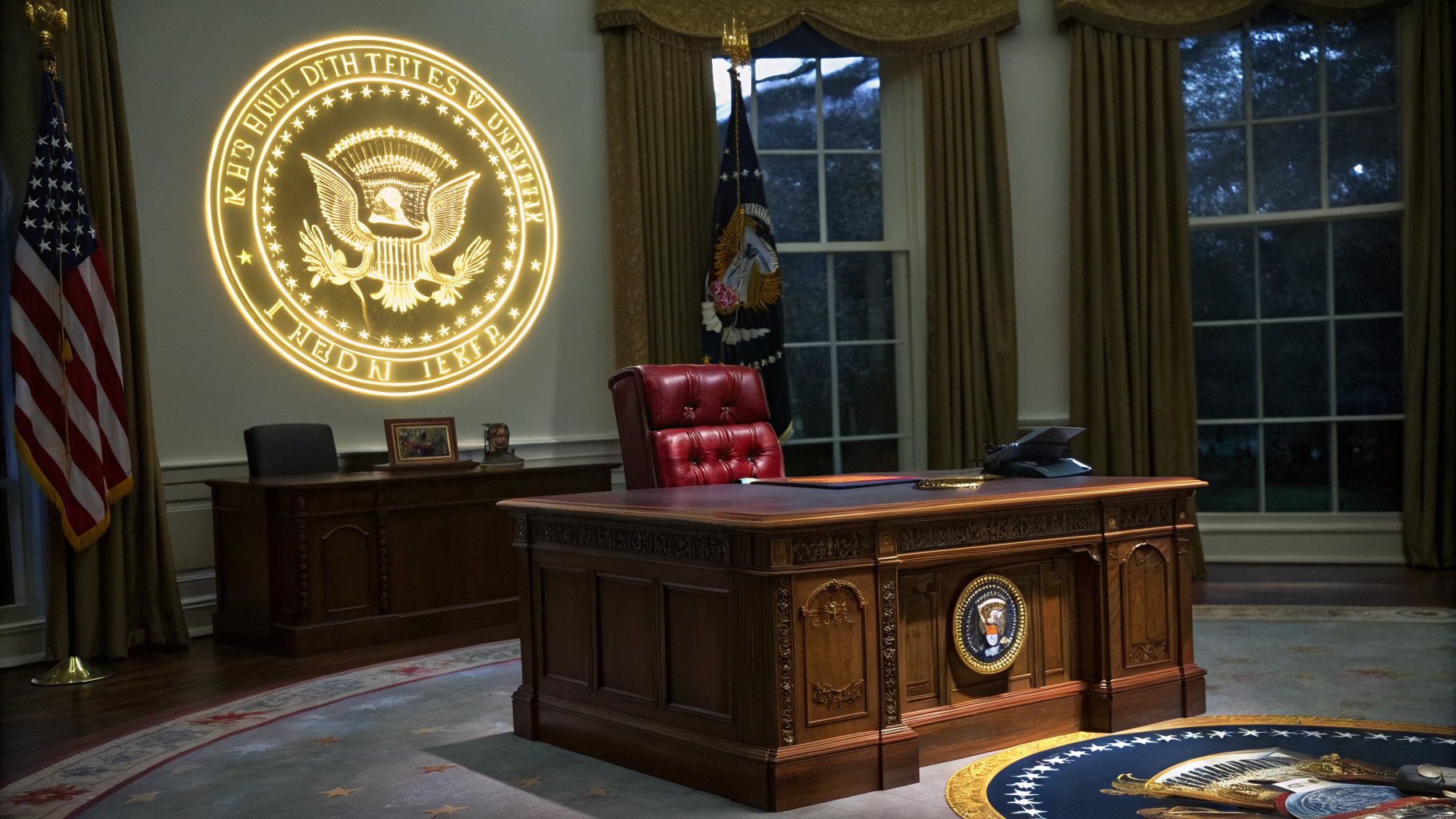
So Sam Altman walks into the Oval Office, and the headline we get is that OpenAI is offering the U.S. government a 5 percent equity stake. Five percent. Let that sink in for a moment. Not 10, not 20, not the 35 percent that Senator Bernie Sanders was reportedly pushing for. Five.
I’ve been covering this industry long enough to remember when AI companies couldn’t give equity away fast enough to secure government goodwill. Now, with a friendly administration and a CEO who knows how to play the political game, the numbers have shrunk to almost token levels. What struck me here is how quickly the Overton window has shifted. A few years ago, a 5% stake in OpenAI would have been seen as a massive concession. Today, it feels like a carefully calibrated PR move.
Let’s be clear: this is not a nationalization. It’s not even a meaningful seat at the table. Five percent gives the U.S. government a minor ownership position, but not control. Not veto power. Not even a board seat unless that’s negotiated separately. It’s the kind of stake you give to a strategic partner you want to keep close but not too close. Think of it as a golden ticket to the factory tour, but you don’t get to touch the machinery.
Why 5% and Not 35%?
The obvious question is why Altman settled on five. Insiders say the talks with the Trump administration have been active for months. Sanders, who has been a vocal critic of unregulated AI development, wanted a far larger slice—something closer to a public interest stake that would give the government real leverage over OpenAI’s direction. The administration, however, seems to have blinked first.
I think the calculus here is straightforward. Trump’s team wants to claim a win on AI without scaring off private investment. They want to say they’re “securing American interests” without actually doing anything that might slow down the AI arms race. A 5% stake is big enough to announce at a press conference, small enough to be meaningless in practice. It’s the political equivalent of a participation trophy.
What’s more, Altman knows that 5% is a bargain compared to what he might have to give up under a less friendly administration. By offering this now, he locks in a relationship that could shield OpenAI from more aggressive regulation down the line. It’s a hedge, not a giveaway.
The Fine Print Nobody’s Talking About
Now, here’s where it gets interesting. The deal reportedly includes some form of profit-sharing or dividend arrangement, but the details are murky. Does the 5% come with voting rights? Can the government sell its stake? Is there a sunset clause? These are the questions that will determine whether this is a genuine partnership or just window dressing.
I’ve read the leaked memos and the background briefings. What I see is a pattern: every time a potential oversight mechanism is proposed, it gets watered down. The AI Safety Institute? Gutted. The proposed licensing regime? Delayed. Now this stake? Minimal. It’s death by a thousand cuts, and the public is left holding the bag.
Let’s also talk about valuation. OpenAI is currently valued somewhere north of $300 billion. A 5% stake would be worth around $15 billion at that valuation—assuming the company doesn’t implode or get disrupted by a competitor. But that’s a big if. The AI market is frothy, and valuations are based on future promise, not current earnings. The government could end up owning a piece of a company that never delivers on its hype. Or—worse—it could own a piece of a company that becomes so powerful that 5% is irrelevant.
I’m not saying this is a bad deal for the U.S. government. It’s better than nothing. But it’s far from the transformative public ownership model that Sanders and others were advocating for. It’s a Band-Aid on a bullet wound.
What the Critics Are Saying
The reaction from the tech policy world has been predictable. The left says it’s a sellout. The right says it’s government overreach. The center says it’s a reasonable compromise. I fall somewhere between the first two. I think it’s a missed opportunity.
Consider the alternative: what if the government had taken a 20% stake with real governance rights? That could have given the public a genuine voice in how AI develops—on safety, on labor impacts, on national security. Instead, we get a token that will likely be sold off in a few years to pay down the deficit, or worse, held as a passive investment that does nothing to shape the technology.
The irony is that Trump’s base might actually support a tougher stance. They’re the ones who fear job displacement and the erosion of American sovereignty. But the administration seems more interested in courting Silicon Valley donors than in protecting workers. 5% is a number that sounds good on Fox News but means little in practice.
How We Got Here
To understand this deal, you have to understand the last decade of AI policy. From the Obama administration’s laissez-faire approach to the Biden administration’s executive orders to Trump’s deregulation push, the government has consistently chosen partnership over oversight. The idea of taking an equity stake in a private AI company was once considered radical. Now it’s being debated in the mainstream.
But the terms matter. And the terms here are weak. Altman has played this perfectly. He’s given the administration a headline without giving up control. He’s turned a potential threat into a marketing opportunity. And he’s done it all while maintaining his image as a visionary who works with government, not against it.
I’ve covered Altman for years. He’s brilliant, no doubt. But he’s also a master of narrative. This deal is a narrative victory, not a policy one. The real story is what didn’t happen: no mandatory safety audits, no licensing requirements, no public interest obligations attached to the stake. Just a check that may or may not ever be cashed.
The Bigger Picture
This deal also sets a precedent. If OpenAI can get away with 5%, what’s to stop Google, Meta, or Anthropic from offering even less? The government will have lost its leverage. Every future negotiation will start from this low bar.
I think we need to step back and ask: what is the government’s role in AI? Is it a passive investor? A regulator? A partner? The answer right now is “all of the above, but none of them effectively.” The 5% stake is a symptom of a larger dysfunction. We’re trying to govern a transformative technology with the tools of the 20th century.
Don’t get me wrong—I’m not arguing for full nationalization. I’m not a socialist. But I am arguing for meaningful public interest safeguards. A 5% stake without strings is not meaningful. It’s a fig leaf.
Let me give you a concrete example. Suppose OpenAI develops an AI that automates 30% of white-collar jobs. The government, as a 5% shareholder, would get a tiny slice of the profits—but it would also have to deal with the unemployment crisis, the social safety net costs, and the political fallout. The stake doesn’t offset the externalities. It’s like owning 5% of a factory that pollutes your river. You get a dividend, but you still have to clean up the mess.
What Should Have Happened
If I were advising the administration, I would have pushed for a 15-20% stake with a public interest board seat. I would have demanded a commitment to open-source certain safety-critical components. I would have tied the stake to specific performance metrics on fairness, transparency, and security. That would have been a real deal.
Instead, we get a press release. And the press release is already being spun as a historic achievement. It’s not. It’s a footnote in the history of AI regulation.
I also wonder about the timing. Why now? OpenAI is reportedly hemorrhaging money on compute costs. The ChatGPT hype is starting to fade. Competitors are catching up. A government deal—even a weak one—provides a veneer of legitimacy and stability. It’s a signal to investors that OpenAI has the government’s blessing. That might be worth more than the 5% itself.
Final Thoughts
Look, I get it. Politics is the art of the possible. Getting any equity stake from a private AI company is a win compared to the status quo of zero. But let’s not pretend this is a victory for the public. It’s a victory for Sam Altman’s lobbying team.
The real test will come in the next few years. Will the government exercise its ownership rights to push for safer AI? Will it use its dividend to fund retraining programs? Or will this stake sit quietly on the balance sheet, generating returns for the Treasury while the technology runs amok?
I’m betting on the latter. But I’d love to be proven wrong.
In the meantime, keep your eyes on the details. Read the fine print. Because in the world of AI policy, the devil isn’t just in the details—he’s in the small print that nobody reads until it’s too late.
And if you’re wondering whether 5% is enough to protect the public interest, ask yourself this: would you trust a company to self-regulate if you owned only 5% of it? Neither would I.
Original source: read the full article